Going Dark: What It Really Means When Your Web Design Agency Stops Responding

There is a particular kind of dread that settles in around week three of unexplained silence. You have sent two follow-up emails. You have left a voicemail. The project dashboard, which was updated daily during the proposal phase, has not changed in eleven days. Your agency has not gone anywhere, technically—but for all practical purposes, they have disappeared.
This scenario is more common than most businesses realize, and it rarely resolves on its own. Understanding why agencies go quiet, what the silence is actually communicating, and how to respond strategically can mean the difference between a recoverable situation and a full project collapse.
Why Agencies Stop Communicating—and It's Not Always Malicious
The most important thing to understand about communication breakdowns is that they are almost never random. Something causes them, and that cause usually falls into one of a few recognizable patterns.
Overextension. Many agencies take on more projects than their team can realistically manage. When workloads spike, client communication is often the first thing to erode—not because the agency is indifferent, but because internal firefighting consumes the bandwidth that should be going toward client updates. Your project may be technically in progress while you receive nothing but silence.
Internal staffing disruption. If the project manager or lead developer handling your account departs, transitions poorly, or gets reassigned, communication can fall through the cracks during the handoff. This is especially common at mid-sized agencies that lack redundant account management structures.
Scope problems they haven't told you about. Agencies sometimes go quiet when they have encountered a technical or creative obstacle they are not yet ready to discuss. Rather than surfacing the issue early—which would require a difficult conversation—some teams delay until they have a solution. Unfortunately, that delay can stretch from days into weeks.
Financial instability. When an agency is experiencing cash flow problems, layoffs, or client losses elsewhere, productivity and morale suffer in ways that affect every active project. Silence in this context is often a symptom of organizational stress that the agency is actively concealing.
The Difference Between a Slow Week and a Warning Sign
Not every delayed response signals a crisis. Agencies have busy periods, and reasonable professionals understand that turnaround times fluctuate. The distinction lies in pattern and context.
A single missed update during a holiday week is noise. Three consecutive check-ins with no substantive response is a pattern. The following indicators, particularly when they appear in combination, deserve serious attention:
- Responses become shorter and vaguer. Instead of project updates, you receive reassurances: "Things are moving along" or "We'll have something to share soon." These phrases carry no information and exist primarily to defer.
- Deliverable dates pass without acknowledgment. When a deadline comes and goes with no proactive communication—no revised timeline, no explanation—that is not a scheduling issue. It is an accountability issue.
- Your point of contact changes without explanation. Suddenly, someone new is CCed on emails. The person you have been working with has gone quiet. Nobody formally introduces the change.
- The project portal or shared workspace stops updating. If files, notes, or task boards have been static for an extended period, it is worth asking whether work is actually happening.
- Calls get rescheduled repeatedly. One reschedule is understandable. A pattern of rescheduling, particularly when the agency initiates it, suggests they are not prepared to have the conversation your project requires.
What to Do Before the Situation Becomes Irreversible
The businesses that navigate communication breakdowns most successfully are those that respond with clarity rather than frustration. Escalating emotionally often gives the agency a reason to become more defensive. A structured, documented approach is both more effective and more protective of your legal position should things deteriorate further.
Put everything in writing. If you have been relying on phone calls or informal Slack messages, shift all communication to email immediately. This creates a timestamped record of your outreach and the agency's responses—or lack thereof. Courts and mediators rely on written records; verbal conversations are difficult to substantiate.
Request a formal status meeting with a specific agenda. Rather than asking for a general check-in, request a meeting focused on three specific items: current project status against the original timeline, any obstacles the agency has encountered, and a revised delivery schedule with committed dates. Framing the request this way signals that you are tracking closely and expect concrete answers.
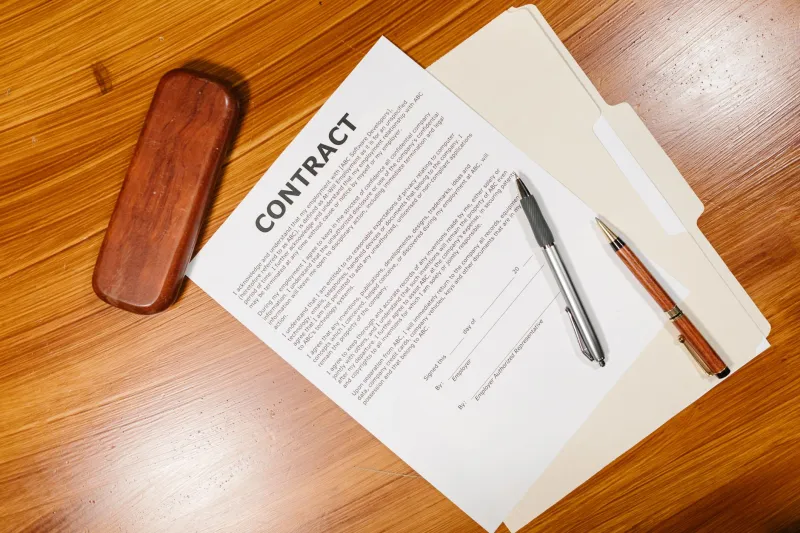
Review your contract for communication obligations. Many agency agreements include provisions about response times, reporting cadences, and milestone notifications. If your agency is violating these terms, you may have grounds to issue a formal notice of breach—or at minimum, to reference the contract in your communications as a way of reinforcing your expectations.
Identify what you already own. Before things escalate further, take inventory of all assets, files, and access credentials currently in your possession. If the agency holds your domain, hosting credentials, or source files without providing copies, that is a significant vulnerability. Requesting access to these materials now—framed as standard project hygiene—is a reasonable and prudent step.
Set a clear deadline for resolution. Vague follow-ups produce vague responses. Give the agency a specific date by which you expect a response or meeting, and state clearly what you will do if that deadline is not met. Whether that means escalating internally, engaging legal counsel, or beginning the process of finding a replacement agency, the agency should understand that silence has consequences.
The Harder Question: When to Walk Away
For some businesses, the communication breakdown is recoverable. The agency responds, explains what happened, and the project gets back on track. But for others, the silence is diagnostic—a signal that the relationship has fundamentally broken down and that continuing to invest time and money in it will only compound the loss.
The decision to transition away from an agency mid-project is not one to make impulsively. It involves real costs: time lost, potential disputes over work already delivered, and the challenge of finding and onboarding a new partner under pressure. But staying with an agency that has demonstrably lost the capacity or the will to communicate with you is rarely the less costly option in the long run.
If you reach the point of considering a transition, document everything before making any formal moves. Preserve all correspondence, deliverables, contracts, and invoices. Consult with a business attorney if the contract involves significant sums or complex intellectual property provisions. And when you begin evaluating replacement agencies, treat their communication practices during the sales process as a direct preview of how they will behave once you have signed.
Silence Is Always Saying Something
The agencies that serve their clients best are not necessarily the ones that never encounter problems. They are the ones that surface problems early, communicate honestly about obstacles, and treat their clients as partners rather than accounts to be managed. When an agency stops communicating, it is not simply failing to send emails. It is revealing something about how it operates under pressure—and that revelation is worth taking seriously.